
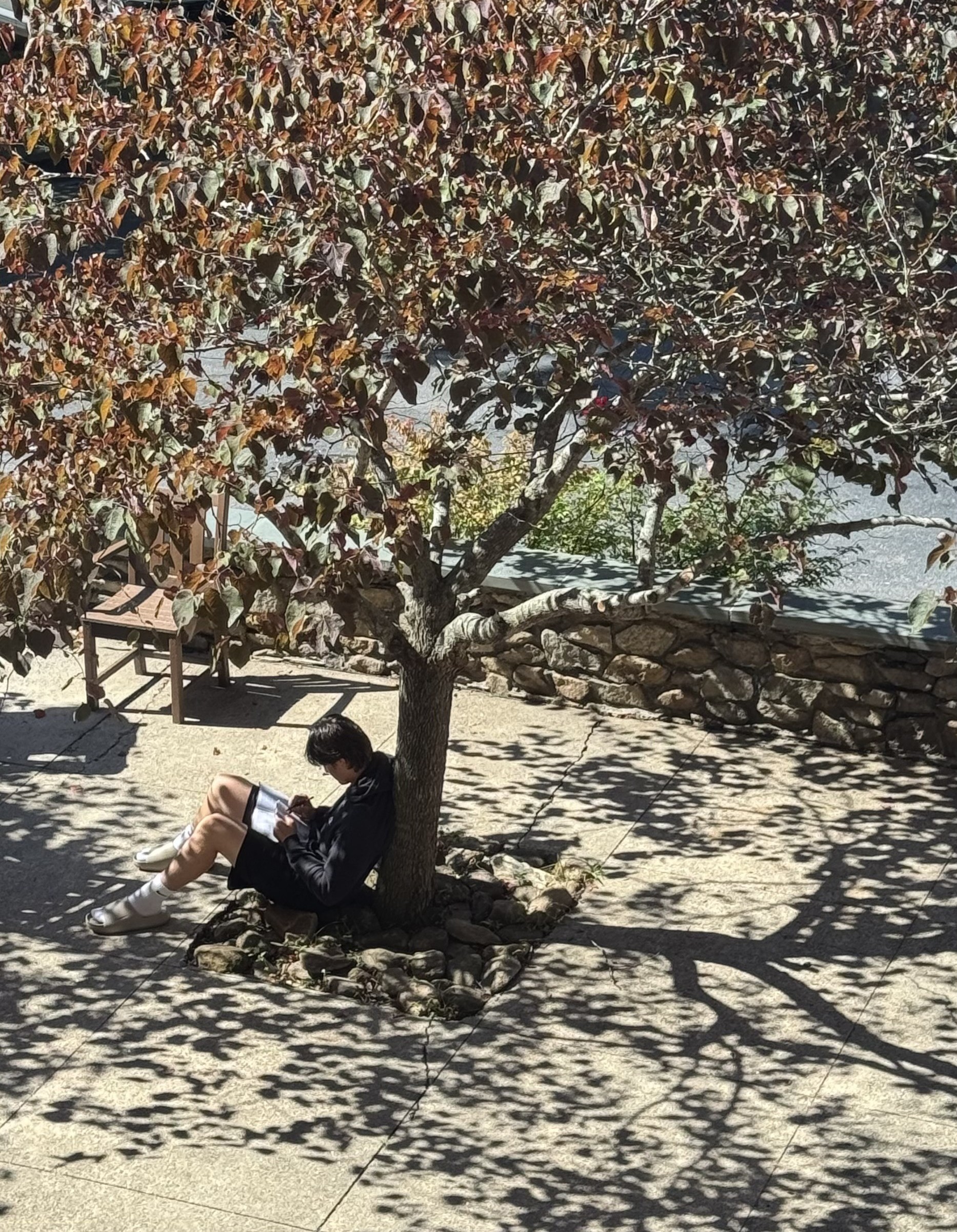
If you have ever taken a morning walk at Ridgecrest during the summer, you have likely seen students sitting outside with their Bibles open having a personal time of devotion. Most youth events have a slot on their schedule reserved for quiet time. While some students may be accustomed to having a regular quiet time at home, others may be intimidated by this open-ended block of time and may need a little direction.
Start by encouraging your students to find the right setting for their devotion time. If the weather is nice, have them find a spot outside. If there is a prayer garden or scenic nature area, this is always a good place to start. Being surrounded by God’s creation helps remind us of His presence.
Next, prompt your students to begin their quiet time with the correct posture. Pray for a soft heart and open ears to truly absorb God’s Word. Commit to focusing this time on Him. If students are worried, anxious, or distracted, remind them that they can take their burdens to Christ. There’s nothing too small to pray about.
Now that students are in the right mindset to begin their devotion, it can be helpful to provide some direction for them. Here are some things to consider as you prepare a quiet time guide for your students:
- Create a paper booklet or handout for this quiet time guide. Yes, it’s easier to send them something they can access on their phones, but the risk of distraction is too great.
- Consider the theme of your retreat or conference. Is there a key verse or passage that you are emphasizing? Provide students with specific verses to read that correlate with the overall focus of the event. Include the passage of Scripture in the quiet time guide. Remember, some students may not have a Bible with them.
- Include an anecdotal story or devotional message to engage them and provide real-life application to the Scripture they will be reading.
- Encourage reflection. You might ask students a few thought-provoking questions and have them write down their responses. Or, you may invite them to write a journal entry and share what’s been on their heart and mind lately.
- Ask students to take a minute or two and focus on being still in the presence of God. If they find this challenging, it can be helpful to choose a phrase from the Bible verses they read and meditate on that.
- End with a time of prayer. Provide students with some prompts to guide their prayer time. You may even include a sample written prayer to help those who may not be comfortable praying on their own.
It’s possible that the quiet time on your retreat schedule is the first experience that your students will have with a personal time of devotion. Use this opportunity to encourage them to continue spending time with God at home.
A personal devotion time is an important discipline to practice in our walk with God. It reminds us to focus on the truth in His word and not the “truth” of the world. Remind your students that having a quiet time is not about checking something off their to-do list. It’s about making time with God a priority. How we spend our time reflects what is important to us. Choosing to spend daily time with God is an integral part of growing our relationship with Him.
0 Comments